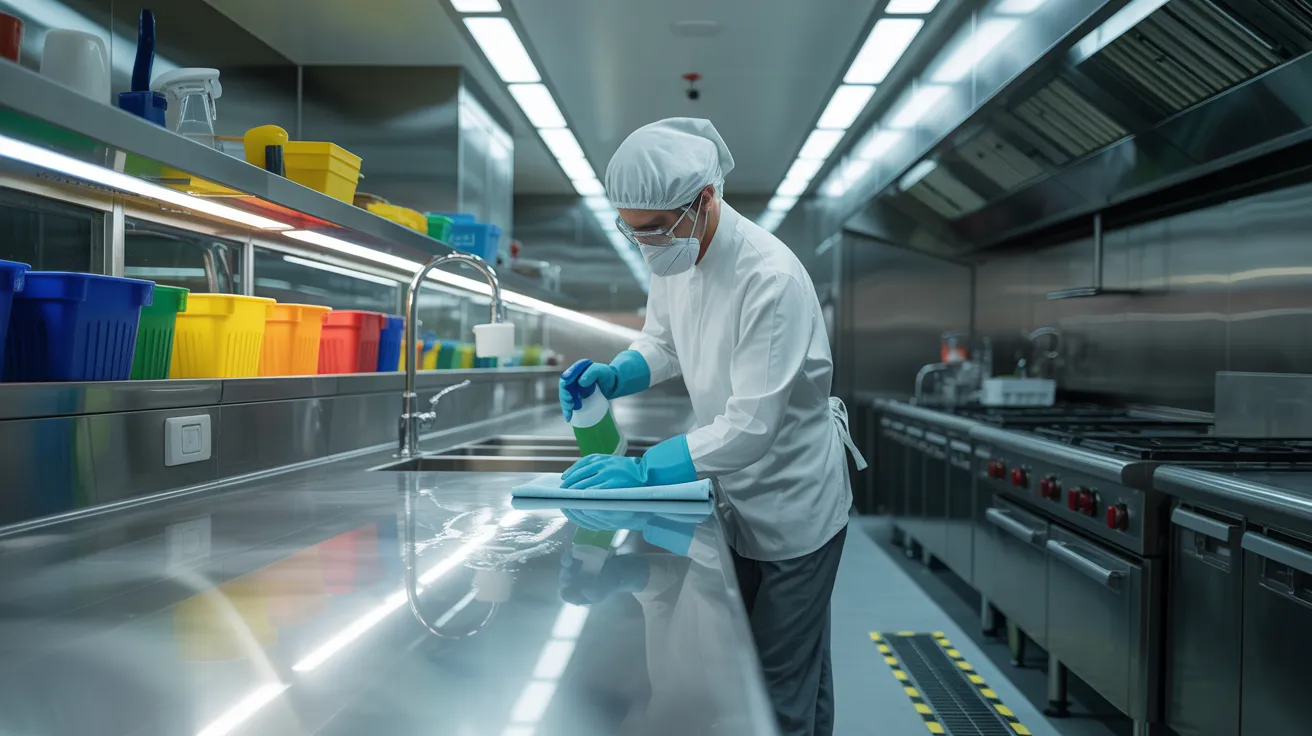
Commercial cleaning and food hygiene professionals in Brampton assist food establishments, food centers, baking facilities, warehouses, and food service operations staying compliant. They decontaminate regularly touched surfaces, food preparation surfaces, equipment, floors, drains, restrooms, and prep zones with approved chemicals, maintaining proper ratios, and recording exposure duration. You need scheduled cleaning determined by risk, volume, allergens, and inspections, plus documented proof backing Hazard Analysis Critical Control Points, quality reviews, and public health compliance. The sections below explains what strong sanitation programs should include.
Main Points
- Food safety cleaning specialists in Brampton serve restaurants, grocery departments, commissaries, warehouses, bakeries, schools, mobile vendors, and allergen-sensitive operations.
- They disinfect frequently contacted areas, food-contact equipment, kitchens, floors, drains, restrooms, and storage areas using zone-based workflows to eliminate cross-contamination.
- Confirmation of approved sanitizer dilution, appropriateness, and exposure duration is performed by certified contractors, with finalization filed using samples, reviews, and remedial documentation.
- Everyday, regular, and annual activities allocated by location comprise maintenance timelines founded on danger, production volume, format changes, incidents, and regulations.
- Suppliers should demonstrate hazard analysis knowledge, health regulatory knowledge, WHMIS education, insurance, endorsements, color-coded instruments, and compliance-ready maintenance files.
Brampton Operations That Need Food Safety Cleaning: Which Ones?
Any Brampton facility that processes, stores, prepares, packages, or distributes food needs food safety cleaning. You must implement it if your business falls under public health inspection, food premises regulations, or internal HACCP-based controls. That requirement covers restaurants, cafeterias, commissaries, grocery food departments, butcher shops, seafood counters, convenience stores, and institutional kitchens.
Documented food sanitation is additionally essential in distribution centers, processing facilities, refrigerated storage, commercial bakeries, school meal programs, event venues, and delivery services. Mobile and temporary operations apply similarly, like mobile kitchens, market vendors, and seasonal booths. Your facility demands recorded sanitation procedures if your team handle raw materials, divide prepared foods, warm meals, or maintain allergen storage. In Brampton, hygiene is not elective; it represents legal, operational, and consumer protection compliance.
What Do Brampton Cleaning Professionals Handle?
Professional cleaning teams specializing in Brampton sanitize touched surfaces, food preparation areas, floors, and sanitary facilities in compliance with food safety regulations. Focus on these locations stems from extreme cross-contamination risk, potential for accidents, and possible regulatory violations.
Knowing their service areas allows you to confirm your operation's sanitation satisfies operational demands and regulatory compliance.
Essential High-Touch Surface Sanitizing
establish a sanitizing protocol
manufacturer specifications and compliance standards to copyright proper function. Specialists might utilize swab testing to verify sanitization success
Food Prep Areas, Flooring, and Sanitary Facilities
Brampton cleaning services zero in on kitchens, floors, and restrooms as each zone involves distinct food safety, accident, and wellness risks. In industrial kitchens, you need grease removal from cooking stations, appliance surfaces, drain systems, preparation areas, and backsplashes to minimize bacterial growth and pest activity.
Floor care that is documented should equally be anticipated. Technicians scrub and extract buildup from grout, tile, and vinyl flooring, then apply suitable dehydration methods so you can limit falls and maintain code-compliant conditions. They also handle entry points where dampness and dirt enter the building.
Restroom cleaning involves disinfecting surfaces, fittings, separators, dispensers, and containers, restocking supplies and controlling odours. They also maintain restaurant cleaning supply rooms where product storage, sink cleanliness, and drain systems impact daily sanitation standards and worker protection.
How Food Safety Cleaning Benefits Brampton Operations
Brampton businesses need to establish food-safe cleaning standards for meeting legal standards and obtaining approval. You also reduce cross-contamination by cleaning and sanitizing food-contact surfaces, equipment, and high-touch areas correctly. Most importantly, you safeguard public health by lowering the risk of foodborne illness in your facility.
Health Code Compliance
Food establishments in Brampton face stringent health requirements, making food safety cleaning critical to fulfilling health code requirements, safeguarding patrons, and eliminating enforcement action. You must maintain clean food preparation areas, verifiable cleaning logs, correct sanitizer application, and auditable operational standards that correspond to municipal and provincial inspection expectations.
Should your cleaning standards decline, you expose yourself to violations, corrective orders, reputational harm, and potential service disruption during additional reviews or enforcement actions.
Contamination Prevention
Meeting health code standards also depends on your ability to prevent cross-contamination during routine food preparation and sanitation. You must keep raw items away from prepared dishes, clean work areas after each use, and keep cleaning products separate from food areas. Clear procedures reduce transfer risks and ensure ongoing adherence to health checks.
You could implement allergen segregation to stop main allergens from reaching common areas, containers, or machinery. Apply separate boards, color-marked equipment, and strict utensil labeling so staff don't mix items throughout cooking or delivery. Enforce washing hands following uncooked meat, fish, egg products, or allergens. Swap cleaning rags frequently, and test disinfectant concentration using strips. When employees learn these procedures each shift, you develop a more valuable guide sanitary, secure business that matches Brampton's safety requirements daily.
Community Health Protection
Should cleaning standards break, you don't simply risk a failed inspection—you increase the potential of foodborne illness impacting customers, staff, and the wider Brampton community. You also weaken your role in protecting public health, especially in high-traffic food premises where pathogens travel quickly through surfaces, equipment, and touchpoints.
You depend on sanitation protocols that eliminate contaminants, properly disinfect, and ensure effectiveness. This entails adhering to contact periods, utilizing authorized sanitizers, recording schedules, and training employees to fulfill health-unit expectations. These actions support disease prevention by reducing microbes before contaminating food or hands. In Brampton, robust sanitation shields vulnerable populations, minimizes disease spread, and proves your diligence. When you adhere to proper protocols, you exceed requirements—you meaningfully lower danger and advance safer food handling throughout the city.
Why Is Cleaning Essential for Food Safety Compliance?
Prioritizing rigorous cleaning routines secures food safety compliance by reducing contamination risks, controlling pathogen growth, and ensuring your facility complies with sanitation requirements under HACCP-based programs and public health regulations. You ensure that contact surfaces stay visibly clean and microbiologically controlled, enabling documented preventive controls and inspection readiness.
Strategic cleaning practices also enhance allergen management by clearing residues that can cause undeclared allergen exposure.
What's the Right Time to Arrange Commercial Cleaning?
You'll get the best results from cleaning plans that account for risk levels, output volume, and legal mandates rather than a static calendar system alone.
Arrange your periodic tasks from regular cleaning
Finding Quality Brampton Cleaning Experts: A Guide
Begin by evaluating providers based on food-safe sanitation requirements—not solely on budget. You should confirm that each organization comprehends CFIA, public health, and HACCP-based requirements applicable to your facility. Request insurance certificates, WHMIS compliance, staff training documentation, and oversight procedures. Assess whether technicians recognize cross-contamination hazards, chemical handling protocols, and verifiable sanitation records.
Additionally, you need to evaluate service dependability and accountability. Obtain references from food facilities in Brampton, then review response times, corrective measures, and communication practices. Verify the company conducts supplier reviews and can deliver compliance-ready records when inspectors or external parties need proof. Verify equipment upkeep, colour-coded tools are applied correctly, and site-specific hazards are identified. A qualified provider ensures compliance, product integrity, and your reputation.
What's covered in a Food Safety Cleaning Plan?
Write out a framework that defines every sanitation task, standard, and responsibility before production begins. You should include cleaning frequencies, approved chemicals, dilution rates, contact times, tools, and verification methods for each area, surface, and device. Remember to add pre-operational inspections, corrective actions, and employee training requirements.
Your plan should also tackle cross-contamination controls, waste handling, pest-prevention measures, and documented schedules for facilities, drains, flooring, and food-preparation surfaces. Specify how you'll separate raw and ready-to-eat processes, facilitate ingredient tracking, and maintain accurate allergen labeling through validated cleaning between product changes. You should establish accountability, document signed records, and evaluate results against regulatory standards, HACCP controls, and customer requirements. When gaps appear, modify procedures immediately and retrain staff.
Commonly Requested Inquiries
Will cleaning services handle nighttime hours at Brampton properties?
Yes, you can set up cleaning services to handle overnight shifts in Brampton facilities. You'll arrange nighttime cleaning around production schedules, access requirements, and staffing levels. Providers generally establish overnight procedures to minimize interruption, copyright compliance, and document finished tasks. You should confirm timeframes, oversight, lockout protocols, and waste management before service starts.
Do Brampton cleaning experts offer emergency spill response solutions?
Yes, you can find many Brampton sanitation experts offering emergency response options. They handle contamination, evaluate risks, isolate zones, and perform swift decontamination to reduce exposure and limit operational impact. You should verify response times, training credentials, safety measures, and procedures. If your facility needs compliance, pick a provider that documents incidents, maintains standards, and supports audits.
Do environmentally safe disinfectants function safely on food-handling equipment?
Absolutely, plant-based sanitizers are appropriate for food preparation areas when you opt for products labeled food safe and regulatory compliant. You must confirm application timing, dilution rates, and rinse procedures ahead of deployment. Plant-derived products minimize harsh chemical exposure, though you require proof of efficacy against harmful bacteria. For ensuring residue-free conditions, implement manufacturer instructions exactly and verify the sanitizer complies with relevant food safety standards.
Do sanitation programs allow for production fluctuations?
Yes, you can tailor maintenance plans for seasonal variations. You should adjust intervals, personnel, sanitizers, and verification steps to correspond to seasonal workflows while maintaining regulatory compliance. You'll lower production downtime by organizing sanitation around production shifts, high demand periods, and usage cycles. You should additionally update written procedures, instruction programs, and environmental monitoring to capture periodic risks, emerging allergens, or higher contamination levels. Periodic assessments keep your program functional.
Do professional cleaning services train staff on sanitation best practices?
Yes, professional cleaning services typically educate your staff on hygiene standards. You get employee instruction on correct chemical application, exposure periods, contamination control, machine breakdown, and documentation. They generally follow training with HACCP, GMP, and CFIA or local public health requirements. Many perform sanitation audits to verify compliance, spot deficiencies, and reinforce corrective actions. This helps you sustain uniform processes, pass inspections, and reduce food safety risks regularly.
Final Thoughts
When you work with Brampton commercial cleaning and food safety experts, you aren't merely cleaning—you keep your operation inspection-ready and your protocols above board. From processing areas to kitchen spaces, every polished surface and maintained area minimizes pest intrusion and prevent costly setbacks. By scheduling service at the proper frequency and adhering to a detailed cleaning schedule, you protect staff, customers, and your reputation. In a tightly regulated environment, clean spaces are essential—they're part of doing business right.
Comments on “Food Safety Cleaning Specialists”